Qerra OS — the operating platform for corporate e-mobility
Qerra OS unifies charging infrastructure, energy management, fleet and employee mobility in a single system.
Platform
Qerra OS
The operating platform behind every Qerra service.
Qerra OS unifies charging infrastructure, energy management, fleet operations, home charging and public-network access in one centralised system. Regardless of the hardware used, the platform provides control over power, access, costs and reporting based on your business needs. When Qerra takes responsibility for your charging infrastructure, Qerra OS is the platform through which we manage the system over time.
The problem isn't installation. The problem is what happens after it.
The chargers are installed. The system works. Six months later the fleet grows, a new site is added or part of the equipment is replaced. That's when it becomes clear that the software in use was built to manage specific chargers, not the whole infrastructure.
- It doesn't account for the building's energy consumption.
- It doesn't manage access and priorities based on business needs.
- It doesn't connect depot charging with employees' home charging in a single system.
- It doesn't allow costs to be tracked by department, team or location.
Over time these small limitations add up and lead to:
- A different interface for every hardware brand
- No common visibility over the site and the fleet
- Manual processes for reporting and cost recovery
- Dependence on the constraints of a specific hardware vendor
The solution: Qerra OS
Qerra OS is the operating platform that unifies every process related to corporate e-mobility in a single system. From depot and workplace charging through home charging, public networks and cost allocation — everything is managed under one set of rules, in one interface and with full traceability. Configuration, rules and session history stay under the client's control. When equipment is changed or added, they remain intact.
What Qerra OS includes
Most organisations manage charging infrastructure, energy and employee mobility through separate systems and suppliers. Qerra OS brings them together in a single centralised platform, providing unified reporting, fewer manual processes and better control over the infrastructure.
Charging infrastructure
Communication with every charger over OCPP 1.6. Centralised management of charging sessions, real-time commands, diagnostics and firmware updates. The brand and model of the charger don't matter.
Energy management
The system monitors energy consumption across the entire site. As load grows, it automatically reduces charging current to stay within the contracted capacity. Dynamic distribution between groups of chargers with defined limits.
Fleet operations
Manages charging priorities based on the schedules and needs of the fleet. Prioritisation by vehicle type — delivery vehicles, service cars, company cars. Full visibility into the status of every vehicle.
Employee mobility
Connects employees' home charging to the same management and reporting system. Costs are calculated automatically and ready for internal accounting and reimbursement.
Roaming and public network
Sessions on public networks are recorded in the same system and under the same rules as workplace, depot and home charging.
Access and reporting
User groups, access policies, RFID cards and a mobile app. Full traceability and history of every session by site, vehicle, department or cost centre.
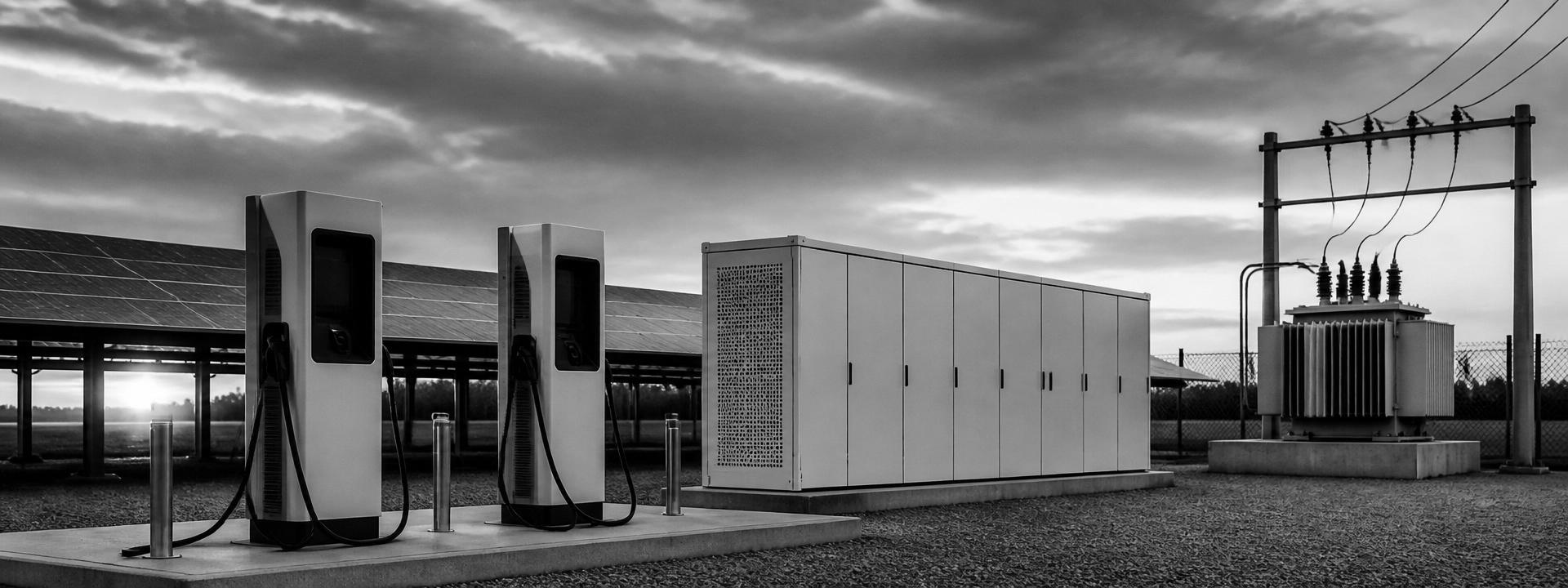
Technical parameters
What sits behind Qerra OS
Protocols
OCPP 1.6 / 2.0.1
Open standard for interoperability across charger brands.
Integrations
PV · BESS · EVSE · Grid
Unified coordination of solar, storage, chargers and grid.
Access & roles
RBAC + Audit
Per-user roles with full audit log of actions.
Hosting
EU Cloud
Hosted in European data centres, GDPR-compliant.
How it works in practice
Qerra OS gives the Qerra engineering team centralised control over the entire charging infrastructure, regardless of the equipment vendor:
- 01Setting power levels and limits per charger or connector
- 02Starting, stopping and controlling sessions remotely
- 03Changing connector availability
- 04Retrieving diagnostic information and configuration
- 05Firmware updates
Dynamic load distribution is managed via groups of chargers with a defined maximum current. When site load increases, the system automatically redistributes the available capacity so that charging remains stable and active sessions are not interrupted.
Every Qerra service is built on Qerra OS
Workplace charging, home charging, roaming access and Charging as a Service are not standalone products — they all use the same platform. That means one energy management layer, one access-control system and one source of reporting for the entire infrastructure. Adding a new service does not mean deploying new software; it extends a system that is already running.
Built on open standards, not on a specific vendor
Qerra OS communicates with every charger over the OCPP 1.6 protocol. Hardware is chosen based on technical and commercial requirements, budget and long-term business goals — not on the limitations of the software platform.
- Add equipment from different vendors without having to change the system
- Expand with new locations and sites without reconfiguring from scratch
- Integrate with existing corporate systems for reporting, management and operational control
Qerra OS does not depend on the hardware vendor's product roadmap. The platform evolves based on the needs of the infrastructure and operations, not on the product constraints of the hardware.
Frequently asked questions
Qerra OS is not just software for managing chargers. It is the platform through which Qerra manages charging infrastructure, energy and fleet operations not only during installation, but over the long term.
Reliable infrastructure is not managed by the hardware. It is managed by the system behind it.