Buses and public transport — Qerra Technologies
Industries
Energy control for reliable public transport
Electrification of public transport introduces large energy loads, fixed schedules and high reliability requirements. Infrastructure must be designed as an integrated component of the transport system.
Operational reality
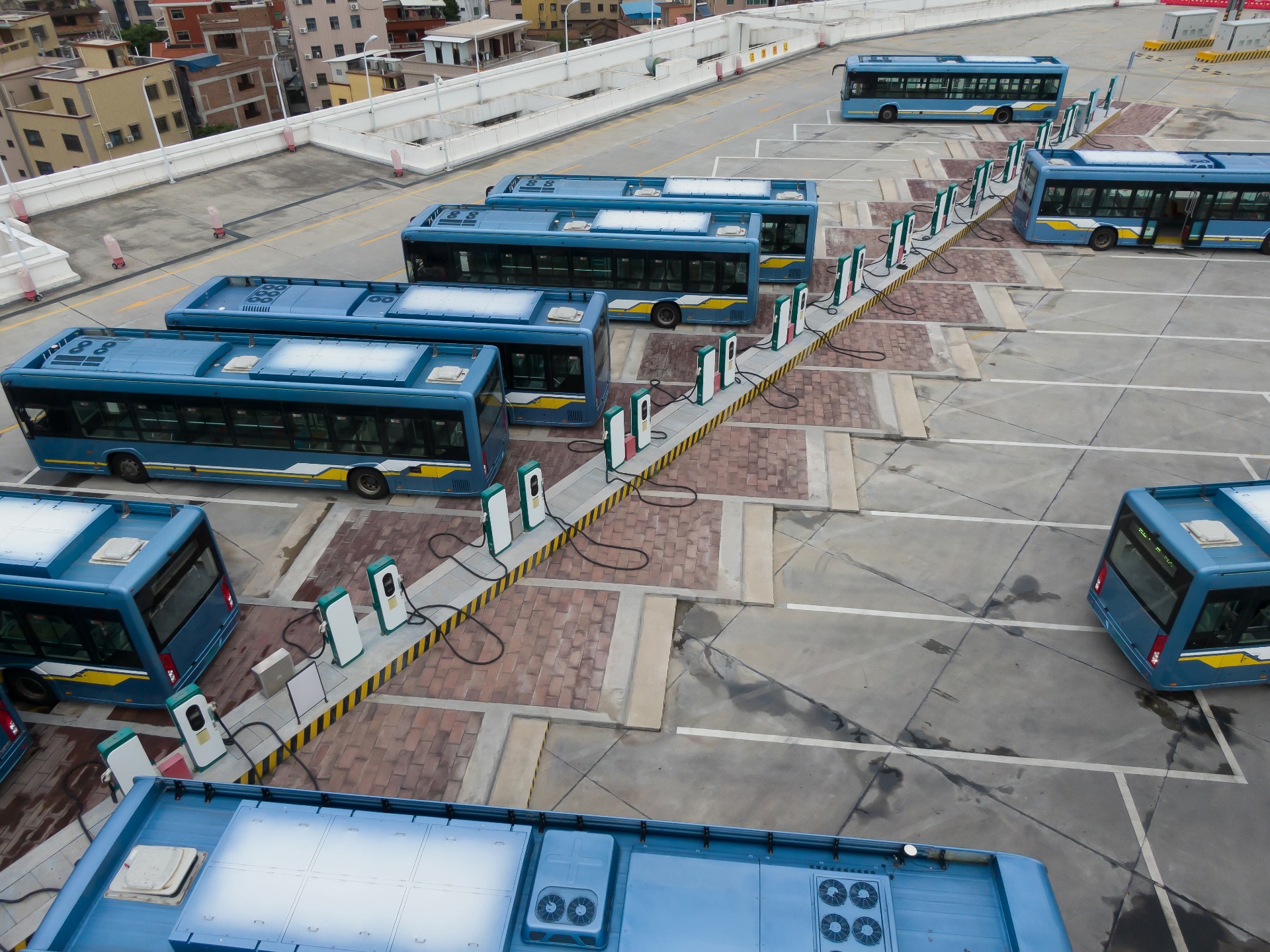
Bus depots run to fixed schedules with large vehicles that consume significant energy:
- Large vehicles with high energy consumption
- Fixed departure schedules where delays are not acceptable
- Depot charging with limited options along the route
- Long planning horizons — decisions taken years in advance
If a bus is not ready on time, the consequences propagate through the entire schedule and the quality of the public service. Reliability is not an advantage — it is a requirement.
Infrastructure constraints
Electric buses require significantly more energy than passenger vehicles. A single bus can consume between 150 and 300 kWh per day, and a depot with dozens of vehicles becomes a site with energy needs comparable to an industrial plant. Grid upgrades can take 18–24 months:
- Capacity that most depots do not have
- Lengthy grid upgrades
- Dependence on utility infrastructure
- Risk of delaying electrification
Without intelligent load management, timelines are dictated by the infrastructure, not by operational goals.
Engineering approach
Qerra designs charging infrastructure for public transport around the schedule, energy constraints and long-term operational reliability:
- Energy control layer: Available power is allocated automatically to guarantee vehicle readiness before departure and to prevent infrastructure overload.
- Schedule-based planning: Charging is planned around departure times, not arrival at the depot.
- Flexible deployment: Infrastructure that allows the electric fleet to grow gradually without disrupting current operations.
- Built-in redundancy: Critical points have backup paths. The system continues to operate through single failures.
- Qerra Care: 24/7 monitoring, remote diagnostics and priority support for infrastructure that underpins a public service.
Typical scenarios
- Overnight depot charging: Buses return at the end of the daily schedule, charge overnight and are ready for the first runs the next day.
- Opportunity charging: High-power charging along the route or at the terminal during planned stops.
- Phased fleet electrification: Gradual replacement of diesel buses with electric ones, with infrastructure and energy capacity expanded in steps.
- Multi-depot operations: Multiple depots managed as one system with central visibility.
Whatever the scenario, the principle is the same: first manage the available energy, then distribute it so that the fleet is ready on time.
System delivery
One engineering partner across the entire life cycle:
- Comprehensive depot assessment and grid analysis
- Design aligned with the schedule and fleet plan
- Independent hardware recommendations
- Installation, commissioning and integration
- Energy control configuration and optimisation
- Qerra Care — continuous monitoring and support
One accountable partner for infrastructure that a public service depends on.
Operational result
Charging infrastructure designed for the requirements of public transport:
- All buses are ready to depart on schedule
- Grid constraints are respected automatically
- Service resilience and continuity are ensured
- Full traceability and reporting of energy consumption
Ongoing reliability
Deployment is only the first step. Through Qerra Care we provide continuous monitoring, preventive maintenance and a guaranteed response time, so every location operates to the same standards.
Learn more about Qerra CareCharging infrastructure should be a natural extension of the transport system — reliable, predictable and ready for growth.